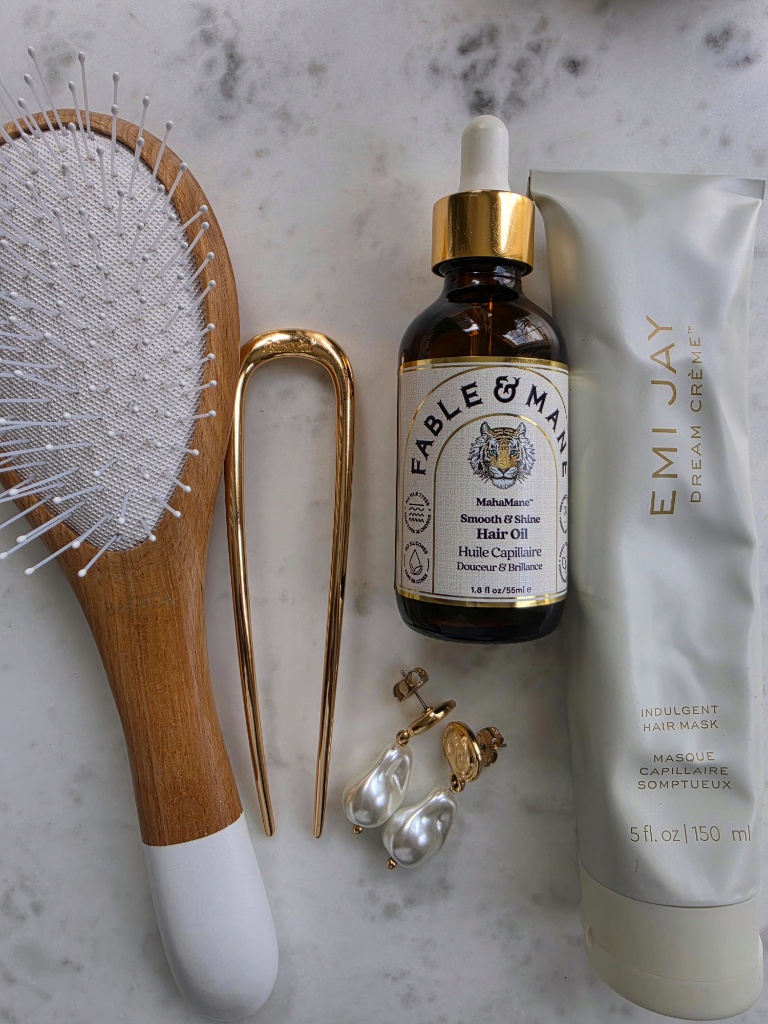
As a trend, ‘minimalism’ feels pretty dead and overplayed. But when it comes to natural hair, don’t dismiss the concept just yet. I have been “natural” for over 20 years and haven’t even gone to any salon in over 10, and when I started, there was little advice. My relatives and black female friends had relaxers, weaves, or other cute styles. A salon was a regular staple in black culture, and I, the perpetual young nerd, turned to the internet for advice while keeping my hair mostly in braids. Lots of advice came and went in those 20 years. I also lived in Europe so long, black hair care products or black hair care stylings were of distant memory.
The natural hair community used “protective styling” as the ultimate gold standard, as well as the LCO method (which I kept), and more targeted wash day routines that blended protein and moisture (which I kept). Do this day, I am so grateful for that free advice. But for me, so many protective styles also seemed to do more harm than good. I am 6’1 so on me, mini twists and many other protective styles were childish. Others said their hair thrived when being left alone, but I always found my hair was healthiest when I washed once, but preferably twice a week to fortify it with strengthening and moisturizing products (high porosity hair definitely needs more consistent wash days). They said they got length from braids, but it thinned my hair from the weight, and the entire back of my hair locked after a few weeks of braids. They said it allowed their hair to breathe and stay fresh,for me, braids trapped sweat severly, especially night sweating from the heaviness and heat. My hair is also fine and I am anemic, so it breaks easily.
What works for me
If you can feel it, in my opinion, it’s too tight. I am tender-headed and would flinch at pressure in every stylist’s chair. So not worth it.
I used to power through the pain of traditional braids, believing the discomfort was just part of the process. I thought braids meant effortless, forgetting the effort in getting them, taking them down, detangling them, and so forth.
But the reality of my hair told a different story. Because my curl pattern features mixed curl patterns of both curly and coily (3c in the back, and 4a in the front) but also mixed textures (quite silky in the back and much coarser in the front with weakest strands in the middle) uniform, tight styles simply wreaked havoc. And I couldn’t see the breaking, locking, matting, or driness if my hair was left alone for extended periods. EVERYTIME, I had braids the back of my hair matted and tangled.
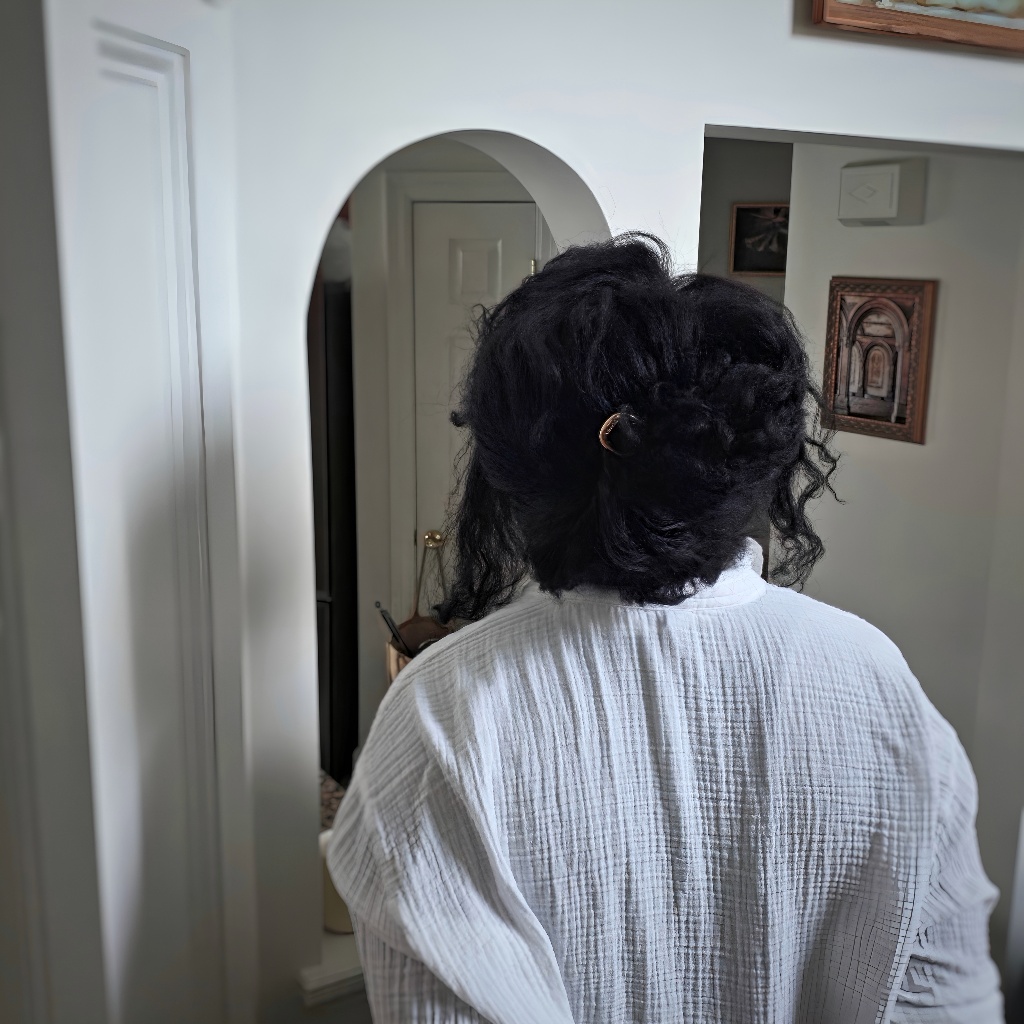
My protective styling routine now centers entirely on low-manipulation buns and deep, intentional hydration. Here is what minimal protective styling looks like in practice:
- Soft Bun during the day: During the day, my goal is to completely minimize mechanical tension while keeping my ends shielded from the elements. I rely on a simple, gentle bun. There is no tight pulling at the edges, no heavy extensions weighing down my roots, and zero scalp strain. It’s an effortless, elegant shape that allows my scalp to breathe. Usually I put some kind of conditioning agent/product and an oil.
- Mini-Buns at night: I section my hair into about 8 mini-buns, pretty much everynight, or two frenchbraids if I need a break. I keep these significantly looser than traditional Bantu knots to avoid putting any tension on the ends of my hair, which can thin out if twisted too tightly. This gentle mini-bunning creates the perfect environment for my styling creams and oils to fully soak into the hair shaft overnight.
- That’s it. No stylists, no professional services, just that for so many years, I can’t remember.


Leave a comment